
Residential Plumbing Inspection Basics Every Future Home Inspector Should Know
If you’re interested in becoming a home inspector, understanding residential plumbing systems will be an important part of your training.
Plumbing may seem fairly simple at first: water comes into the house, travels through pipes to fixtures, and then drains away. In reality, a residential plumbing system includes water supply piping, drain and waste piping, venting, fixtures, water heaters, shutoff valves, sump systems, and numerous connections that can develop problems over time.
A small plumbing defect can also create a much larger problem. A slow leak beneath a bathroom fixture may eventually damage flooring and framing. An improperly installed drain may create recurring backups. A leaking water heater can damage a finished basement.
The good news is that a home inspector does not need to be a plumber.
Your job is to understand how the system works, operate accessible plumbing fixtures using normal controls, identify visible defects and potential safety concerns, and recognize when additional evaluation or repair by a qualified plumber is appropriate.
Here’s what every future home inspector should know about inspecting residential plumbing systems.
What Plumbing Components Does a Home Inspector Inspect?
A home inspector generally evaluates readily accessible portions of the water supply, distribution, drainage, waste, venting, fixtures, and water-heating systems.
Depending on the property and applicable standards of practice, this may include:
· Main water supply
· Interior water distribution piping
· Drain and waste piping
· Visible vent piping
· Faucets and fixtures
· Toilets
· Bathtubs and showers
· Water heaters
· Shutoff valves
· Sump pumps
· Hose connections
· Functional drainage
· Water flow
· Visible evidence of leakage
A professional home inspection is visual and non-invasive.
You generally aren’t opening walls, performing sewer pressure tests, dismantling fixtures, or determining the condition of concealed piping.
That makes observation especially important.
What Types of Water Supply Piping Should a Home Inspector Recognize?
One of the first things you should learn is how to identify common residential water supply materials.
Depending on the home’s age and location, you may encounter:
· Copper
· PEX
· CPVC
· Galvanized steel
· Polybutylene
· Plastic service piping
· Other older or less-common materials
Identifying the material is only the beginning.
You also need to evaluate its visible condition.
Look for:
· Corrosion
· Leakage
· Improper support
· Damaged piping
· Questionable connections
· Previous repairs
· Incompatible materials
· Reduced flow
· Improper installation
Older piping isn’t automatically defective simply because of its age.
Your inspection should focus on the material, its condition, and any evidence suggesting current or potential problems.
Why Is Galvanized Plumbing Important to Recognize?
Galvanized steel water piping is commonly found in older homes.
Over time, corrosion and mineral buildup can occur inside the piping. This may gradually reduce the interior diameter of the pipe and restrict water flow.
A galvanized pipe can look relatively normal from the outside while being significantly restricted internally.
Possible clues include:
· Low water flow
· Corrosion at fittings
· Rust staining
· Leakage
· Older piping combined with newer partial replacements
This is why future inspectors need to look beyond simply asking whether water comes out of the faucet.
How Should a Home Inspector Test Water Flow?
During a home inspection, operate accessible plumbing fixtures and observe how the system performs under normal conditions.
One useful technique is operating multiple fixtures at the same time.
For example, you may run a sink while operating a shower or another fixture.
You’re looking for significant changes in flow that could suggest a problem.
However, remember:
A home inspection is not a comprehensive plumbing performance test.
You aren’t calculating exact flow rates throughout the entire house or guaranteeing the performance of concealed piping.
You’re observing how the system performs during the inspection.
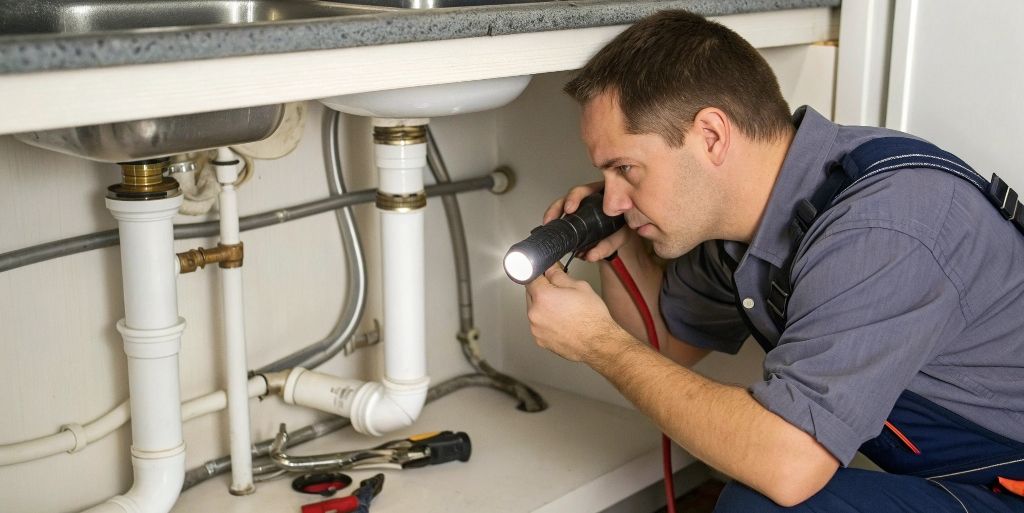
What Should a Home Inspector Look for Under Sinks?
Looking beneath sinks should become a routine part of your inspection process.
Check for:
· Active leakage
· Water staining
· Corrosion
· Improper drain connections
· Damaged piping
· Deteriorated cabinets
· Improperly supported pipes
· Previous repairs
· Shutoff valve condition
Don’t just look at the pipes.
Look at the cabinet bottom.
Swollen particleboard, staining, discoloration, or damaged finishes may indicate previous leakage even when the plumbing is dry during your inspection.
This is a good example of how home inspectors learn to identify evidence, not just active defects.
How Should a Home Inspector Inspect a Toilet?
Toilets are one of the most frequently used plumbing fixtures in a home and deserve more than a quick flush.
Check for:
· Proper flushing
· Loose mounting
· Leakage
· Cracks or damage
· Continuous running
· Improper filling
· Water staining
· Deteriorated flooring around the base
Why is a loose toilet a problem?
A toilet that moves at the floor may compromise the seal between the toilet and the drainage system.
Movement can eventually contribute to leakage and damage to the surrounding flooring or subfloor.
If the toilet moves, report the condition and recommend appropriate correction.
Don’t repeatedly rock the toilet in an attempt to determine how loose it is.
Inspect without causing damage.
What Should You Look for at Bathtubs and Showers?
Bathrooms are common locations for water damage.
Operate accessible fixtures and inspect around tubs and showers for:
· Leakage
· Poor drainage
· Damaged grout
· Deteriorated caulking
· Loose fixtures
· Damaged wall surfaces
· Water staining
· Deteriorated flooring
· Loose shower components
Pay particular attention to areas where different materials meet.
Corners, tub-to-wall joints, shower-door connections, and plumbing penetrations are common locations for moisture problems.
How Can a Home Inspector Identify Plumbing Leaks?
Some leaks are obvious.
Others require investigation.
Potential clues include:
· Active dripping
· Water staining
· Corrosion
· Swollen cabinets
· Damaged drywall
· Stained ceilings
· Deteriorated flooring
· Musty odors
· Rust staining
· Elevated moisture readings
If you find a ceiling stain directly beneath a bathroom, investigate the plumbing above when possible.
If you find deterioration beneath a kitchen sink, operate the faucet and drain while watching the piping.
Good inspectors don’t just identify a stain.
They ask:
Where could the water be coming from?
What Should a Home Inspector Know About Drainage?
Water entering a fixture is only half of the plumbing system.
It also needs to drain properly.
When operating sinks, tubs, and showers, watch for:
· Slow drainage
· Backups
· Gurgling
· Leakage
· Unusual movement of water in nearby fixtures
· Improper drain configurations
Slow drainage may have several possible causes, including a localized obstruction, buildup within the piping, improper venting, or a larger drainage problem.
Avoid diagnosing the exact cause when you don’t have enough evidence.
Describe what happened and recommend further evaluation when appropriate.
What Is a Plumbing Trap?
A plumbing trap is the curved portion of the drain system designed to retain water and help prevent sewer gases from entering the home.
The familiar P-trap beneath a sink is a common example.
Future home inspectors should learn to recognize improper or questionable drain configurations.
You may encounter:
· Missing traps
· Leaking traps
· Improper configurations
· Flexible drain materials
· Damaged piping
· Improper connections
Your job isn’t to redesign the plumbing system during the inspection.
Identify the condition and explain why it matters.
Why Is Plumbing Venting Important?
Drainage systems require proper venting to help fixtures drain correctly and maintain appropriate trap seals.
Much of a home’s vent system is concealed inside walls, so a home inspector generally cannot inspect the entire system.
However, visible portions can still provide important information.
You may observe vent piping in:
· Attics
· Basements
· Crawl spaces
· Under sinks
· At the roof
Improper venting may sometimes be associated with slow drainage, gurgling fixtures, sewer odors, or other drainage concerns.
What Should Home Inspectors Know About Water Heaters?
The water heater is one of the most important components of the plumbing inspection.
Start by identifying:
· Fuel type
· Approximate capacity
· Manufacturer
· Apparent age
· General condition
Then evaluate accessible components.
Depending on the water heater type, look for:
· Corrosion
· Leakage
· Water staining
· Venting
· Combustion components
· Gas piping
· Electrical connections
· Temperature and pressure relief components
· Drain pan when applicable
· Proper support and installation
Don’t simply determine whether hot water comes from a faucet.
Look at the entire installation.
What Is a TPR Valve and Why Is It Important?
A temperature and pressure relief valve, commonly called a TPR valve, is an important safety device installed on storage-type water heaters.
It is designed to relieve excessive temperature or pressure inside the tank.
Inspectors should evaluate visible components associated with the valve and its discharge piping.
Potential concerns may include:
· Missing discharge piping
· Improper discharge-pipe installation
· Leakage
· Corrosion
· Improper termination
· Obstructions or caps
Be cautious about manually operating a TPR valve during a standard inspection.
Older valves may leak after being operated and may not reseal properly.
Follow your applicable standards of practice and inspection procedures.
Why Is Water Heater Venting Important?
Gas-fired water heaters produce combustion gases that need to be safely vented outside.
Look for visible venting conditions such as:
· Loose connections
· Corrosion
· Improper slope
· Damaged vent material
· Improper clearances
· Evidence of backdrafting
· Improper termination
Combustion venting isn’t simply a plumbing concern.
It is also an occupant-safety concern.
Future inspectors should understand how plumbing, HVAC, and combustion safety overlap.
How Do You Determine the Age of a Water Heater?
Water heater data plates usually contain the manufacturer, model number, serial number, capacity, and other equipment information.
Many manufacturers encode the manufacturing date within the serial number.
Learning to decode common manufacturer serial numbers is a useful home inspection skill.
However, don’t make the mistake of evaluating a water heater based only on age.
An older water heater may still be operating, while a newer unit could have significant installation defects.
Consider both age and condition.
What Should a Home Inspector Know About Sump Pumps?
In homes with basements or crawl spaces, sump pumps may play an important role in managing groundwater.
Inspect accessible sump systems for:
· Pump operation
· Visible electrical concerns
· Discharge piping
· Check valves
· Loose components
· Improper discharge locations
· Evidence of previous water problems
A sump pump that operates during the inspection isn’t a guarantee that the basement will never experience water intrusion.
Your report should accurately describe the system and its observed operation without making guarantees about future conditions.
What Are Common Plumbing Defects Found During Home Inspections?
Common findings include:
· Leaking faucets
· Loose toilets
· Slow drains
· Corroded piping
· Active pipe leakage
· Improper drain configurations
· Damaged fixtures
· Water heater corrosion
· Improper water heater venting
· TPR discharge-pipe concerns
· Poor water flow
· Deteriorated shutoff valves
· Improperly supported piping
· Evidence of previous water damage
· Sump-pump concerns
Not every plumbing defect requires major repairs.
Part of becoming a skilled inspector is learning to distinguish between a maintenance item and a potentially significant problem.
How Should a Home Inspector Report a Plumbing Problem?
Avoid vague comments such as:
“Plumbing is bad.”
Instead, describe exactly what you observed.
For example:
“Active leakage was observed at the drain connection beneath the kitchen sink during normal fixture operation. Continued leakage may damage the cabinet and surrounding materials. Recommend repair by a qualified plumbing contractor.”
A good inspection comment generally answers three questions:
What did you observe? Why does it matter? What should happen next?
That approach creates clearer, more professional, and more defensible inspection reports.
Frequently Asked Questions for Future Home Inspectors
Do home inspectors check for plumbing leaks?
Yes. Inspectors look for visible leakage and evidence of moisture at accessible plumbing components and fixtures. Concealed piping inside walls, ceilings, and floors generally cannot be fully evaluated.
Do home inspectors perform sewer scopes?
A sewer scope is typically a separate specialized inspection using a camera inserted into the building’s sewer lateral. Many home inspectors offer this as an additional service after obtaining appropriate training and equipment.
Can a home inspector tell if a sewer line is damaged?
Not necessarily during a standard home inspection. A sewer-camera inspection may be needed to evaluate the interior condition of the sewer lateral.
Do home inspectors test water pressure?
Inspection practices and standards vary. Some inspectors measure static water pressure, while others primarily evaluate functional flow during normal fixture operation.
Should home inspectors operate plumbing shutoff valves?
Generally, inspectors should be cautious about operating older or questionable shutoff valves because they may leak or fail when disturbed. Follow your applicable standards of practice and company procedures.
Can a home inspector determine whether pipes will freeze?
No inspector can guarantee that piping won’t freeze. However, visible piping in vulnerable locations, inadequate insulation, or other observable conditions may indicate an increased potential for freezing.
What plumbing tools should a new home inspector carry?
Useful tools may include a flashlight, moisture meter, infrared camera when appropriate, water-pressure gauge when part of your inspection procedure, camera, and basic tools needed to access readily removable components.
Learn to Follow the Water
One of the most valuable habits you can develop as a future home inspector is learning to follow the water.
Start with the supply.
Where does water enter the house?
What type of piping distributes it?
How does it reach the fixtures?
Does the system provide reasonable flow?
Then follow the drainage.
Does the fixture drain properly?
Where does the drain go?
Are there visible leaks?
How is the system vented?
Finally, look for evidence of where water shouldn’t be.
A stain beneath a bathroom, corrosion below a pipe connection, swollen cabinetry, deteriorated flooring, or moisture near a water heater may provide important clues.
This is where home inspection becomes more than simply working through a checklist.
A skilled inspector connects the observations.
You don’t need to be a licensed plumber to become an excellent home inspector. But you do need to understand how residential plumbing systems work, recognize common defects, understand the limitations of a visual inspection, and know when a qualified plumbing professional should become involved.
Develop a consistent inspection process, understand how water supply and drainage systems interact, and practice writing clear, objective inspection comments.
Those skills will help you become a more knowledgeable and professional home inspector.
Interested in becoming a professional home inspector? Quality training that combines technical education with hands-on field experience can help you learn to inspect residential plumbing, roofing, electrical, heating and cooling, exteriors, interiors, structural systems, and other major components of a home—and develop the practical skills needed to start a successful career in home inspection.